

Park Ji-woong on Building Two or Three Big Companies Instead of Ten Small Ones
Forbes Korea “Trend Leading Companies with Jinho Park”, Episode 5: an interview with Park Ji-woong (박지웅) of Fast Track Asia (패스트트랙아시아) (2022.04). A company builder that launched 11 companies in ten years now talks not about companies built to sell, but about companies built to keep growing.
An interview series with the entrepreneurs who will lead Korea over the next decade — 15 innovators beyond beauty, from agtech and AI to robotics, digital therapeutics and F&B. That is why BEAUS COMPANY aims to grow beyond beauty — expanding and thriving together with every Korean industry.
Source: Forbes Korea, 2022.04, 「박진호가 만난 TREND LEADING COMPANIES(5) 박지웅 패스트트랙아시아 대표」 · © Forbes Korea · Read the original on Forbes Korea (Korean) ↗
This is BEAUS COMPANY’s own summary and commentary based on the original Forbes Korea article (in Korean). The original article is © Forbes Korea.
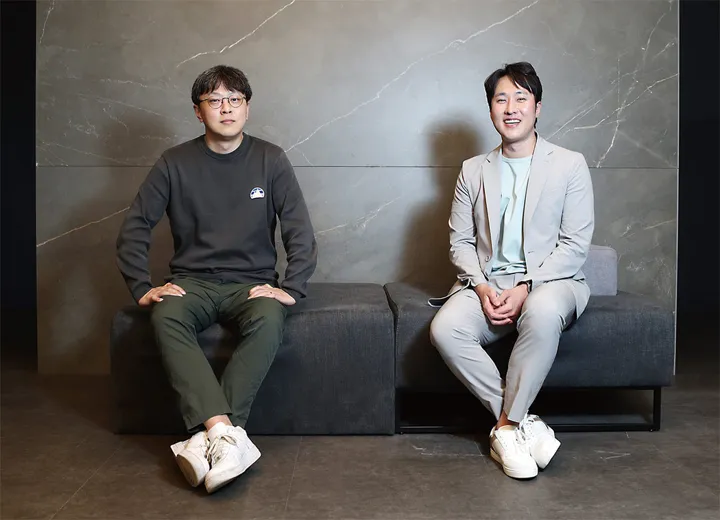
Fast Track Asia is a company builder founded in 2012 by Shin Hyun-sung, Noh Jung-seok and Park Ji-woong. It recruits people to turn ideas into companies and then supports their management, and by the time of the interview it had launched 11 companies in ten years. It had sold ventures such as Goodoc, Hello Nature and Foodfly, and was operating Day1 Company (formerly Fast Campus), the shared-office provider FastFive, and the investment firms Fast Investment and Fast Ventures. According to the article, the combined value of the sold and operating companies was estimated at around KRW 800 billion.
For the next decade, CEO Park Ji-woong named his direction as two or three large companies rather than ten small ones. Collaboration among small companies, he argued, yields effects only as big as those companies; disruptive results come when each has grown large enough first. As an investor, he values people who are unusually relentless in a particular area, and stressed the discipline of stepping up to the plate again and again without changing one's criteria after misses. He also said FastFive would expand beyond space into providing or brokering the services businesses need.
Moderator Park Jin-ho, then in his ninth year as a founder and reflecting on his company's direction, asked whether beauty belongs among the essential everyday businesses of food, clothing and shelter. Park Ji-woong said he had concluded otherwise ten years earlier, but that beauty spending has since grown to rival the apparel market, so in hindsight it should be included. To founders weighing an exit, he advised that a company is not a product, and that they should focus solely on how to grow it sustainably over the long term.
Beaus Company's takeaway: seeing beauty as a basic category of everyday consumption lets beauty brands and marketers define their market more broadly. And the point that it matters to first grow the area where you can be number one before expanding, rather than scattering many bets, applies directly to beauty brands in their growth stage.
Read the full interview on Forbes Korea →
- Since 2012 it has founded 11 companies in ten years, with sold and operating companies valued at about KRW 800 billion combined.
- Its direction for the next decade: two or three big companies rather than ten small ones.
- Collaboration among small companies only yields effects of their size, so each should grow big enough first.
- In investing it values people who are unusually persistent in a specific field, and keeps its criteria regardless of outcomes.
- A company is not a product, so founders should focus on building it to last rather than on an exit.
“I don't think a company is something you sell. A company isn't a product, is it? And you probably didn't start it in order to sell it in the first place.”
From the interview — Park Ji-woong, Fast Track Asia · Forbes Korea
FAQ
What does Fast Track Asia do?
Fast Track Asia is a company builder founded in 2012 by Shin Hyun-sung, Noh Jung-seok and Park Ji-woong. When an idea emerges, it recruits people, creates a company and supports its management; it founded 11 companies in ten years and operates Day1 Company and FastFive, among others.
What is the core of the interview?
Park Ji-woong names 'two or three big companies rather than ten small ones' as the direction for the next decade. He argues that companies should collaborate only after each has grown large enough, and advises founders weighing an exit to focus on building a company that lasts.
Does beauty count as a basic 'food, clothing and shelter' business?
Asked by Park Jin-ho, Park Ji-woong said that ten years ago he judged it did not. But beauty spending has grown so much since then that, in the end, he believes it should be included.
Read the full interview on Forbes Korea → About the moderator, Jinho Park
Source: Forbes Korea, 2022.04, 「박진호가 만난 TREND LEADING COMPANIES(5) 박지웅 패스트트랙아시아 대표」 · © Forbes Korea · Read the original on Forbes Korea (Korean) ↗
This is BEAUS COMPANY’s own summary and commentary based on the original Forbes Korea article (in Korean). The original article is © Forbes Korea.