

Fresheasy CEO Jung Joong-kyo on riding the shoulders of giants
Forbes Korea “Trend Leading Companies with Jinho Park”, Episode 6: an interview with Jung Joong-kyo (정중교) of Fresheasy (프레시지) (2022.05). In a market splintering by taste, building the infrastructure first and publishing other people's IP can take a company further than building one brand.
An interview series with the entrepreneurs who will lead Korea over the next decade — 15 innovators beyond beauty, from agtech and AI to robotics, digital therapeutics and F&B. That is why BEAUS COMPANY aims to grow beyond beauty — expanding and thriving together with every Korean industry.
Source: Forbes Korea, 2022.05, 「박진호가 만난 TREND LEADING COMPANIES(6) 정중교 프레시지 대표」 · © Forbes Korea · Read the original on Forbes Korea (Korean) ↗
This is BEAUS COMPANY’s own summary and commentary based on the original Forbes Korea article (in Korean). The original article is © Forbes Korea.
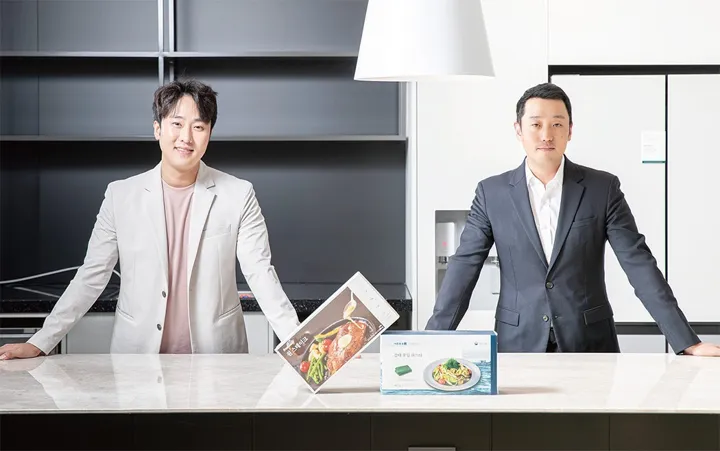
Fresheasy was founded in 2016, when "meal kit" was still an unfamiliar term in Korea. While the market was worth less than KRW 30 billion, the company spent about KRW 70 billion on production facilities. Rather than push its own brand, it chose to manufacture home meal replacement (HMR) products for large corporations and e-commerce platforms, and CEO Jung Joong-kyo credits this infrastructure-first call for its No. 1 share of Korea's meal-kit market.
Jung defines a megatrend as something that will not change in ten years. He sees the core of meal kits as convenience: shoppers buy by menu rather than by raw ingredient. From around 2019 the company expanded into an HMR "publisher" role, manufacturing for anyone with a recipe. Collaborations with famous restaurants, influencers and other industries, and its acquisitions of Tasty Nine, Heodak, Doctor Kitchen and Line Logistics System, follow the same logic.
Moderator Park Jin-ho framed the conversation against the rise of niche brands in beauty. Jung's view that IP created inside one company drifts toward a single decision-maker's taste explains why brands planning creator and influencer collaborations benefit from gathering a wide range of outside IP.
The takeaway Beaus Company highlights is channel fit. Fresheasy's tteokbokki kit with YouTube creator Park Mak-rye was sold through Baemin Shopping Live, chosen with her YouTube-centered fandom in mind. Selling where the fandom already gathers is also the first checkpoint for creator commerce in beauty.
Read the full interview on Forbes Korea →
- Fresheasy spent about KRW 70 billion on production facilities while the market was worth less than KRW 30 billion.
- Its "shoulders of giants" strategy leaves branding and consumer reach to large corporations and e-commerce platforms.
- From 2019 it took on an HMR "publisher" role, manufacturing for anyone with a recipe.
- A tteokbokki meal kit with Park Mak-rye was sold on Baemin Shopping Live to match her YouTube fandom.
- Before any M&A, Fresheasy works with a partner for three to four years to test the fit of both organizations.
“A startup has limits in pioneering a new market on its own, so we set a strategy of "climbing onto the shoulders of giants."”
From the interview — Jung Joong-kyo, Fresheasy · Forbes Korea
FAQ
What does Fresheasy do?
Fresheasy is a food company founded in 2016 that manufactures and distributes meal kits. It produces some 500 HMR products, including meal kits, side dishes and salads, makes private-label goods for hypermarkets and e-commerce companies on an OEM/ODM basis, and held the largest share of Korea's meal-kit market at the time of the interview.
What is the key message of the interview?
CEO Jung Joong-kyo judged that a startup could not pioneer a new market alone, so he built production infrastructure first and manufactured HMR for large corporations and e-commerce platforms, a strategy he calls "climbing onto the shoulders of giants." Fresheasy later became an HMR "publisher" for anyone with a recipe, and Jung prefers collecting and distributing good IP over developing its own.
What are Fresheasy's overseas plans and long-term goal?
At the time of the interview it exported to seven countries and was preparing local production in about five, aiming to raise overseas exports to 40-50% of its business by 2025. Jung's ultimate goal is to build Korea's Berkshire Hathaway.
Read the full interview on Forbes Korea → About the moderator, Jinho Park
Source: Forbes Korea, 2022.05, 「박진호가 만난 TREND LEADING COMPANIES(6) 정중교 프레시지 대표」 · © Forbes Korea · Read the original on Forbes Korea (Korean) ↗
This is BEAUS COMPANY’s own summary and commentary based on the original Forbes Korea article (in Korean). The original article is © Forbes Korea.