

Lee Chang-hyuk on Choosing Lasting Branding over Fleeting Marketing
Forbes Korea “Trend Leading Companies with Jinho Park”, Episode 4: an interview with Lee Chang-hyuk (이창혁) of SUMSEI (섬세이) (2022.03). Starting over after his exit, he is building a brand not through ads but through an experience space where the product is barely visible.
An interview series with the entrepreneurs who will lead Korea over the next decade — 15 innovators beyond beauty, from agtech and AI to robotics, digital therapeutics and F&B. That is why BEAUS COMPANY aims to grow beyond beauty — expanding and thriving together with every Korean industry.
Source: Forbes Korea, 2022.03, 「박진호가 만난 TREND LEADING COMPANIES(4) 이창혁 섬세이 대표」 · © Forbes Korea · Read the original on Forbes Korea (Korean) ↗
This is BEAUS COMPANY’s own summary and commentary based on the original Forbes Korea article (in Korean). The original article is © Forbes Korea.
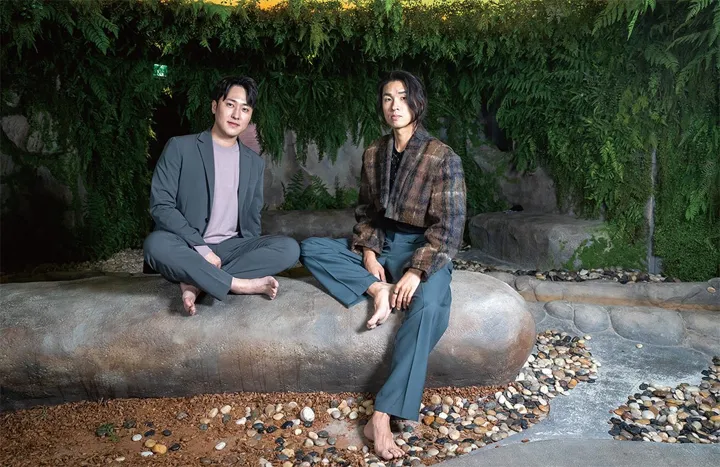
Lee Chang-hyuk founded Mefactory, known for its pore-strip nose pack, in late 2014 and sold it to Able C&C in 2018 for KRW 32.4 billion. By focusing on social media marketing, with a coined term for the satisfaction of clearing pores and blunt before-and-after content, the company reached sales in the KRW 12 billion range within two years of launch. Moderator Park Jin-ho introduced Mefactory as a company that reminded the beauty industry just how much social media marketing matters.
After the exit, Lee chose small appliances over cosmetics. Aiming to create a Korean answer to Balmuda, he launched a body dryer in 2019, first under a different brand name and now as SUMSEI. When expansion required capital, he put KRW 2 billion of his own exit proceeds into a capital increase. Reflecting on how interest fades the moment celebrity-model campaigns stop, he decided to focus on branding built around the concept of nature instead of consumable marketing.
Visitors walk barefoot over sand, gravel and water, and the product sits at the end, where they dry their feet. Lee said the space is already profitable on admission fees alone and is spreading by word of mouth without influencer marketing. He also outlined plans for a candle warmer, a brand IP business and further space projects.
Beaus Company's takeaway: attention bought with ad spend disappears when the spending stops, but an experience that breaks expectations leads customers to create content themselves. Letting people experience the brand's story before putting the product front and center can be a way to build a memorable brand even in a beauty market flooded with new launches.
Read the full interview on Forbes Korea →
- me factory, known for its pore strips, hit the KRW 12 billion range in sales within two years and was sold for KRW 32.4 billion in 2018.
- After the exit he chose small appliances over cosmetics and launched a body dryer in 2019.
- Learning that celebrity-model marketing loses attention the moment it stops pushed him toward branding that lasts.
- It is spreading by visitors' word of mouth, without influencer marketing.
“I concluded that the way we had been marketing was far too fleeting, so I decided to focus on branding that becomes a legacy rather than on consumable marketing.”
From the interview — Lee Chang-hyuk, SUMSEI · Forbes Korea
FAQ
What does SUMSEI do?
SUMSEI is a small-appliance brand led by Lee Chang-hyuk after his exit from me factory. It launched a body dryer in 2019 (first sold under the name 오트루베) and focuses on branding built around the concept of nature.
What is the core of the interview?
Lee concluded that his past marketing was too fleeting and decided to focus on branding that becomes a legacy rather than on consumable marketing.
What did he decide after the exit?
Instead of cosmetics, he chose small appliances, aiming to build a 'Korean Balmuda.' When the business needed capital to expand, he put KRW 2 billion of his exit proceeds into a capital increase.
Read the full interview on Forbes Korea → About the moderator, Jinho Park
Source: Forbes Korea, 2022.03, 「박진호가 만난 TREND LEADING COMPANIES(4) 이창혁 섬세이 대표」 · © Forbes Korea · Read the original on Forbes Korea (Korean) ↗
This is BEAUS COMPANY’s own summary and commentary based on the original Forbes Korea article (in Korean). The original article is © Forbes Korea.