

Caring CEO Kim Tae-sung on a senior market that moves on trust
Forbes Korea “Trend Leading Companies with Jinho Park”, Episode 10: an interview with Kim Tae-sung (김태성) of Caring (케어링) (2022.09). Seniors respond not to what's hot but to trust built through repeated exposure, referrals and real reviews, and narrowing the target can actually widen reach.
An interview series with the entrepreneurs who will lead Korea over the next decade — 15 innovators beyond beauty, from agtech and AI to robotics, digital therapeutics and F&B. That is why BEAUS COMPANY aims to grow beyond beauty — expanding and thriving together with every Korean industry.
Source: Forbes Korea, 2022.09, 「박진호가 만난 TREND LEADING COMPANIES(10) 김태성 케어링 대표」 · © Forbes Korea · Read the original on Forbes Korea (Korean) ↗
This is BEAUS COMPANY’s own summary and commentary based on the original Forbes Korea article (in Korean). The original article is © Forbes Korea.
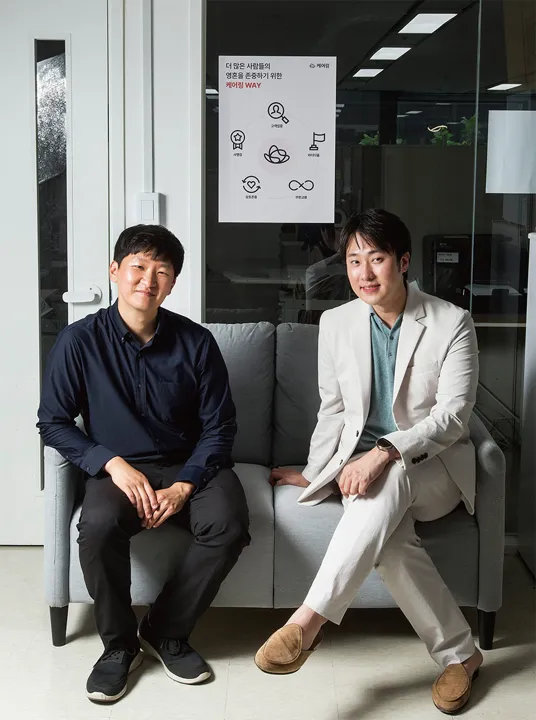
Founded in 2019, Caring is a senior-tech startup that runs home care services under Korea's long-term care insurance, operating 100% of its branches directly from headquarters nationwide. At the time of the interview, client churn was under 1%, and the company had raised over KRW 30 billion in a 2022 Series A. CEO Kim Tae-sung saw a problem: although the national insurer paid care providers about KRW 6 trillion the previous year, the market was dominated by small individual centers, leaving information fragmented and service quality low.
His first move was to improve conditions for caregivers, the supply side of the service. Caring pays KRW 12,000 an hour regardless of region, above the KRW 10,500 average, and keeps paydays and severance pay reliable. Instead of an app, it uses phone consultations to capture qualitative needs such as a quiet personality or a shared religion before matching, and a team of about ten developers built its own systems for attendance, scheduling and health records.
Moderator Park Jin-ho pointed out how hard marketing is in a market where the target splits into caregivers, seniors and their families. Kim's answer was to target caregivers only. People in their 50s earn the caregiver certificate most often, and they are also the ones whose parents need care, so aiming at one target covers several groups at once.
What Beaus Company found most telling was Kim's admission that a month of advertising drew no response. Seniors acted only after repeated exposure, referrals and real reviews had built up, and YouTube performed better than Facebook or Instagram. The lesson: don't transplant formulas built for fast-spreading younger audiences; design separately for the time and channels in which trust accumulates.
Read the full interview on Forbes Korea →
- Caring started by raising caregiver pay to KRW 12,000 an hour, above the KRW 10,500 average.
- People in their 50s earn the caregiver certificate most often and are also the generation whose parents need care, so targeting caregivers alone reached several groups at once.
- Ads ran everywhere from flyers to TV and YouTube with no response for a month; seniors moved only after repeated exposure, referrals and reviews built trust.
- Instead of an app, Caring matches caregivers through phone consultations that capture qualitative needs, and a team of about ten developers built its attendance, scheduling and health-record systems.
- Caring's goal is to extend healthy life expectancy so that seniors never need home care services.
“Unlike young people, who rush in the moment they hear something is hot, seniors only moved once trust had built up.”
From the interview — Kim Tae-sung, Caring · Forbes Korea
FAQ
What does Caring do?
Founded in 2019, Caring is a senior-tech startup that provides home care services based on Korea's long-term care insurance, with 100% of its operations run directly by headquarters nationwide. It also runs family care, a welfare equipment office, its own caregiver training institute and day care centers, all built on digital technology.
What is the key takeaway from the interview?
CEO Kim Tae-sung first gathered the supply side by improving caregiver conditions: KRW 12,000 an hour, on-time pay and severance. In marketing he targeted caregivers only, and learned that seniors act only after repeated exposure, referrals and real reviews build trust.
What are Caring's plans?
Caring aims to become a total senior care platform by expanding into community care, which lets seniors receive care in their own homes. It plans to spend all of the more than KRW 30 billion raised in its Series A on this; it has built three day care centers and aims for 100 within four years.
Read the full interview on Forbes Korea → About the moderator, Jinho Park
Source: Forbes Korea, 2022.09, 「박진호가 만난 TREND LEADING COMPANIES(10) 김태성 케어링 대표」 · © Forbes Korea · Read the original on Forbes Korea (Korean) ↗
This is BEAUS COMPANY’s own summary and commentary based on the original Forbes Korea article (in Korean). The original article is © Forbes Korea.